
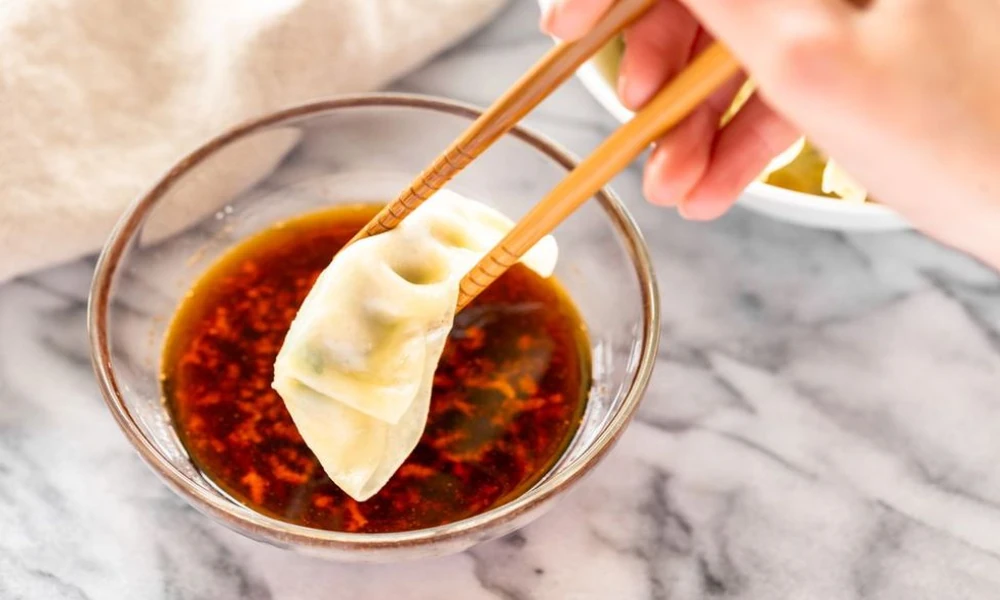
A useful dip adds a flavor or texture you want beside the dumpling. Before making several, identify what the filling already brings and decide how each sauce would differ. A small, purposeful selection is easier to serve and taste than a crowded spread of similar creamy condiments. The dumplings should remain part of the experience people notice.
Decide what the filling brings first
Read the filling as if you were choosing ingredients for the rest of dinner. Oh! So Cheesy contains potato and cheddar in a full-size vegetarian pierogi. Cheese is already part of the bite, so another cheese-centered dip creates repetition. You may enjoy that, but it is a different choice from adding a tangy or peppery contrast.
Consider the dumpling’s role. A shared starter with one dip asks less of the sauce than a snack supper built around several components. If the dumplings accompany another main dish, the dip may be unnecessary. Start with the occasion instead of assuming every serving of pierogies needs its own sauce collection.
Think about familiarity too. When trying a new filling, serving some dumplings without a dip lets you learn what you like about them. A strongly flavored sauce can dominate the first impression. Put it beside the food rather than applying it to the whole dish if you want room to compare your own preference.
The filling also sets ingredient boundaries. A vegetarian cheese product contains dairy, while a plant-based filling may be intended for a different meal. Check the dip’s ingredients against the same requirements you used for the dumplings. An appealing sauce is not a useful addition if it changes the plate in a way the diner did not expect.
Plan the dip preparation around the dumplings’ cooking directions. The pierogies are sold frozen and uncooked, so read the current package before choosing when to start. A cold dip can be mixed first and refrigerated until serving, leaving the cook free to concentrate on the dumplings and put the finished food on the table together.
Give each dip a distinct purpose
If you want more than one dip, make the differences meaningful. One might provide tang, while another provides heat. Two sauces with nearly the same character may create extra bowls without offering a real choice. Describe the purpose in plain words before buying ingredients; if both descriptions sound identical, consider keeping only one.
Browsing the frozen pierogi choices in Raleigh can help establish that starting point. A potato-and-cheddar filling asks a different pairing question from a sweet-potato-and-garlic filling. Select the dumpling first, then decide which dip would add something you want rather than preparing a fixed sauce spread for every possible variety.
Use familiar condiments thoughtfully. A favorite dressing or dip already in the refrigerator can be a reasonable choice if its flavor and ingredients fit. There is no need to create an entirely new recipe for each bowl. Check the product’s own storage and use information, and take out only what you intend to serve appropriately.
Keep strong accents adjustable. If one person enjoys a pronounced pepper flavor and another does not, a separate spicy option can preserve that choice. Do not quietly add the same heat to the supposedly different second dip. The value of two options lies in their actual distinction, not their colors or names.
Choose vessels that make the options understandable. Each dip needs enough room for its intended use and a stable position near the food. Plain descriptions help when ingredients are not obvious. A tiny decorative bowl that spills as someone reaches for it is less useful than an ordinary dish that fits the table.
Consider how people will transfer the dip. A serving spoon may be appropriate when diners want some on their own plate. If a food is awkward to dip directly, plate a portion of sauce separately instead of forcing the serving idea. The eating arrangement should support the dumpling format you chose, not demand that the food behave differently.
Stop before the sauce spread becomes the meal
Count the tasks each additional dip creates: ingredients to find, preparation to finish, a bowl to place and something to store afterward. That is worthwhile when the choice serves a real guest preference. It is less persuasive when the third sauce exists only because a spread looks fuller with three bowls. A dinner can feel generous without multiplying every component.
Leave room for the food around the dumplings. A vegetable side or fresh component may contribute more contrast than another dip. If the table is already crowded, remove the least useful sauce before shrinking everyone’s place setting. People need space to eat comfortably as well as options to choose from.
Make a modest first serving of the dips and keep any additional quantity appropriately stored until needed. This allows you to see what people actually enjoy without putting every available ingredient on the table at once. Handle perishable components according to relevant guidance and their own labels; a casual snack spread still needs a sensible service plan.
Afterward, notice which choice had a purpose. Perhaps diners liked the tangy option with cheddar, or perhaps they preferred the dumplings plain. Those observations can simplify the next gathering. You do not need to preserve a sauce merely because you once bought ingredients for it.
Keep the dip that contributes a distinct note. If another bowl repeats the filling or duplicates its neighbor without adding enjoyment, leave it out and give the dumplings more room on the plate.